At-Home Hormone Testing: What I Liked, What I Didn’t, and What Matters Most
A personal review of at-home hormone testing—what worked, what didn’t, and what women in surgical menopause should know before using these kits.
12/19/20254 min read
What I Observed: Where At-Home Hormone Testing Can Be Helpful
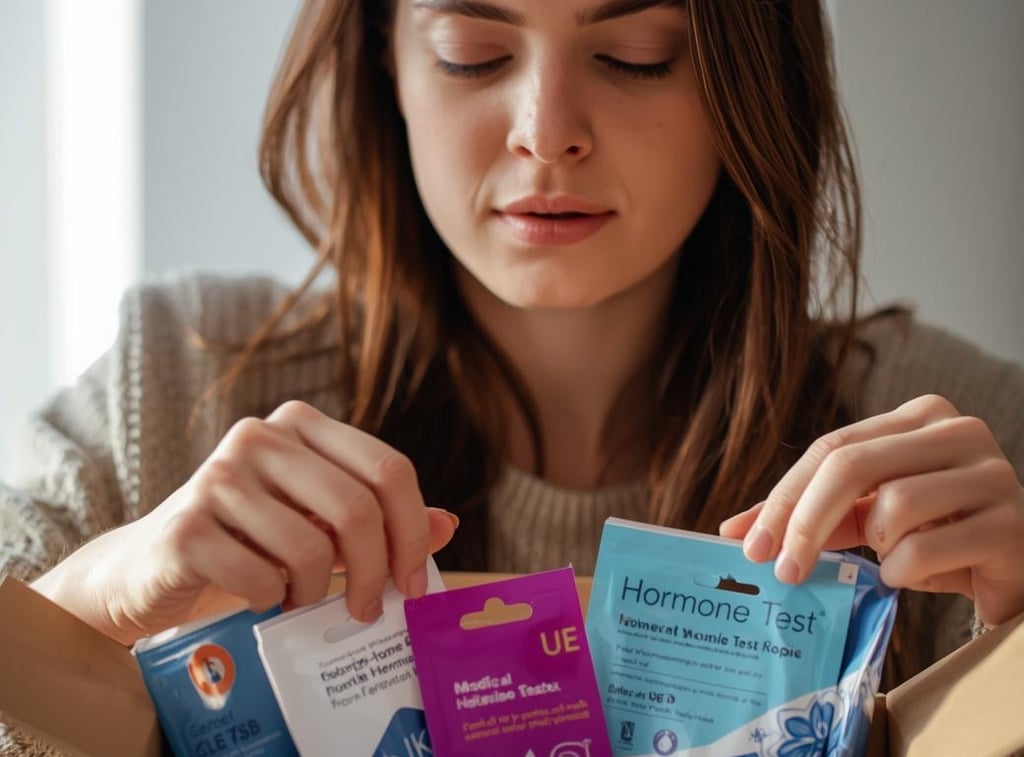
In my experience, an at-home hormone test can be a valuable tool—if the data is reasonably accurate. When it is, it offers something many women are craving: the ability to correlate how you feel with an actual measurement.
This kind of testing can be especially helpful for women who are actively experimenting with or adjusting hormone replacement therapy, particularly injectable methods. Having some form of feedback—rather than relying solely on symptoms or guesswork—can feel grounding and informative.
Overall, I found the tests to be useful and directionally helpful. By that, I mean the results may not have been perfectly precise, but they moved up and down in ways I would have expected based on what I was doing and how my body was responding. That directional movement gave me confidence that the test was at least capturing meaningful trends.
One specific use case where I found this helpful was with progesterone. For women trying to increase progesterone levels, alternative delivery methods—such as vaginal or rectal administration—can be worth exploring. These routes bypass the digestive system, unlike oral progesterone, and in my own experimentation, I did see a noticeable increase in progesterone levels reflected in the test results.
That kind of feedback can be empowering. It allows a woman to observe how different approaches affect her body rather than feeling completely in the dark.
That said, while there were aspects I appreciated, there were also places where the test did not meet my expectations—and those are important to talk about honestly.
Next, I want to share where this testing fell short for me.
Where the Test Didn’t Meet My Expectations
There were two aspects of this at-home hormone test that I think are important to understand before deciding whether it’s right for you.
1. The App Limits When You Can Test
The kit comes with four weeks’ worth of testing strips and requires you to use a companion app. Before downloading it, I read another user’s review mentioning frequent marketing messages and reminders, which she found annoying. Assuming I would feel the same, I chose not to enable notifications or reminders.
What I didn’t realize at first is that the app only allows testing on pre-scheduled days—approximately every seven days. There was no option to test earlier or later. When I wanted to test on Day 6 instead of Day 7, the app simply wouldn’t allow it.
The workaround I used was deleting my profile and creating a new one, which reset the app back to Day 1 and allowed me to test when I wanted. While this technically worked, it’s not ideal—especially if your goal is to track trends over time within the app. Resetting your profile breaks that continuity.
If flexibility and pattern-tracking matter to you, this is something to seriously consider.
2. The Testing Window Can Create Unintended Stress
The second issue surprised me more. For the test to work properly, it requires at least six hours of urine accumulation and must be done using first-morning urine.
In practice, this can be challenging. If you wake up in the middle of the night—say around 3:00 a.m.—and need to use the restroom, you likely won’t be able to test that morning unless you can wait until around 9:00 a.m. I found myself waking up and immediately calculating timing: Should I go now? Can I wait? Will this ruin my test?
That mental negotiation created stress and disrupted my sleep, which felt counterproductive—especially given how important sleep and nervous system regulation are during menopause.
While this may not bother everyone, it’s worth noting. Anything that adds pressure or vigilance around sleep and bodily cues deserves careful consideration.
Quick Summary: Is This Test Right for You?
This at-home hormone test may be a good fit if you:
• Are already on HRT and want directional feedback, not perfect precision
• Are experimenting with dose, delivery method, or timing (especially injections)
• Appreciate data as a supporting tool, not a decision-maker
• Are comfortable working within a structured testing schedule
You may want to skip this test (or proceed with caution) if you:
• Feel easily stressed by rigid rules, timing requirements, or sleep disruption
• Are looking for highly personalized interpretation or medical guidance
• Prefer flexibility in when you test
• Tend to become anxious or hyper-focused on numbers
This test is a tool—not a verdict.
My Final Takeaway
At-home hormone testing can offer helpful insight, especially when used to observe trends and correlate symptoms with measurable change. For me, the value came from seeing movement in the direction I expected—not from chasing exact numbers.
At the same time, the structure of the app and the rigid testing requirements introduced friction that I didn’t anticipate. When a wellness tool begins to interfere with sleep or increase vigilance around the body, it’s worth pausing and reassessing.
What I’ve learned—again and again—is that data works best when it supports self-trust, not when it replaces it. Hormones don’t operate in isolation. They respond to stress, safety, sleep, nourishment, and emotional load. No test can fully capture that.
Used thoughtfully, this kind of testing can be informative. Used rigidly, it can unintentionally create more stress than clarity.
A Gentle Word on Safety & Responsibility
I want to be clear: I’m sharing my personal experience and observations, not medical advice. Hormone therapy and testing are highly individual, and what works for one person may not be appropriate for another.
If you’re making changes to hormone therapy, especially dosage or delivery method, it’s important to work with a qualified healthcare provider who understands menopause—and ideally, surgical menopause. Use testing as one data point, not a standalone decision-maker.
If You’re Reading This and Feeling Overwhelmed…
If you’ve tried testing, tracking, optimizing—and still feel frustrated or disconnected from your body—there is nothing wrong with you.
Sometimes what’s needed isn’t more data, but more safety. When the nervous system settles, symptoms often become clearer, decisions feel less urgent, and trust begins to return.
That’s the work I focus on—helping women come back into relationship with their bodies, not into battle with them.
If you’d like support in that direction, please send me a message.
Affiliate Transparency
Some of the links in this post may be affiliate links, which means I may earn a small commission at no additional cost to you. I only share tools I’ve personally tried and believe can be useful when used with awareness and discernment.
Surgical Menopause Wellness
Empowering women through surgical menopause resources and wellness practices.
Disclaimer
The information provided on this website is for informational and educational purposes only and is not intended as a substitute for professional medical advice, diagnosis, or treatment. This content should not be used to diagnose, treat, cure, or prevent any health condition or disease. Always consult with a qualified healthcare provider before making any changes to your health regimen, starting new treatments, or if you have questions regarding a medical condition. Reliance on any information provided by this website is solely at your own risk.
© 2024. All rights reserved.